
 Dansk
Dansk Norsk
Norsk Svenska
 Deutsch
Bag Filtration

Bag filtration - Filtration in all grades
Bag filtration are often used as pre-filtration for all sorts of liquids, before the liquid reaches a filtration proces where finer filtration is needed. This makes bag filtration ideal for many applications. While we offer a comprehensive range of filtration solutions, including advanced liquid filters and water treatment systems, bag filtration stands out as a versatile and often economical choice for numerous applications.
This guide will walk you through what bag filtration is, how it works, its typical applications, and why it might be the ideal solution for your business.
-

![Bag Filter PE - size 4 - 10 µm - UB4PE0010]() -20%
-20% -
![Bag Filter PE - size 4 - 25 µm - UB4PE0025]() -20%
-20% -
![Bag Filter PE - size 4 - 50 µm - UB4PE0050]() -20%
-20% -
![Bag Filter PE - Size 4 - 75 µm - UB4PE0075]() -20%
-20% -
![Bag Filter PE - size 4 - 100 µm - UB4PE0100]() -20%
-20% -
![Bag Filter PE - Size 4 - 150 µm - UB4PE0150]() -20%
-20% -
![Bag Filter PE - size 4 - 200 µm - UB4PE0200]() -20%
-20%


What is bag filtration?
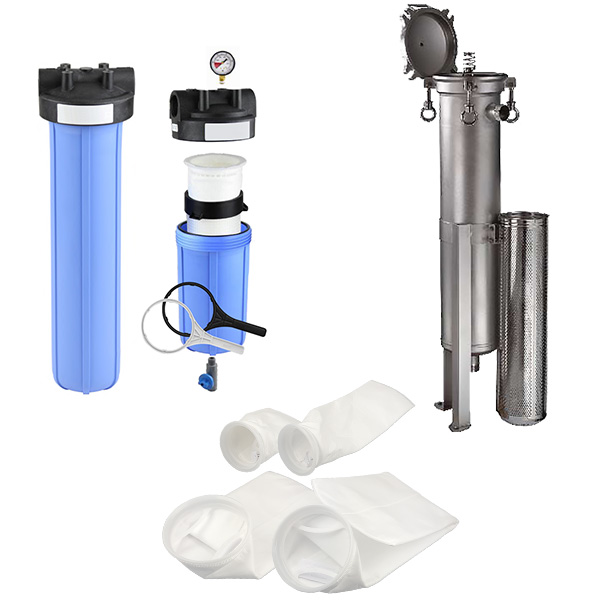
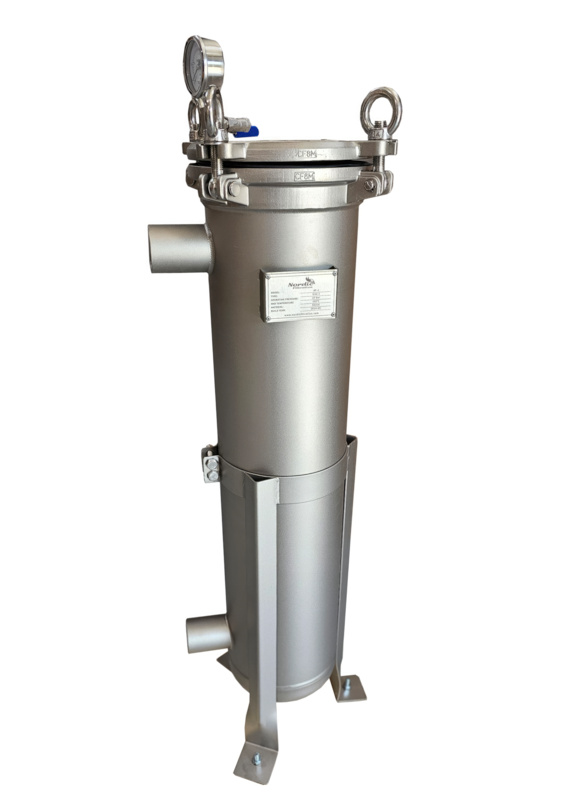
Bag filtration is a widely used and straightforward method for separating solids from liquids. It involves passing a liquid stream through a filter bag, which is typically housed within a pressure vessel. The filter bag acts as a physical barrier, trapping suspended particles while allowing the clean liquid to pass through.
This method is praised for its simplicity, cost-effectiveness, and flexibility, making it a popular choice for everything from basic pre-filtration to more demanding industrial processes.
The mechanics of bag filtration
The core of any bag filtration system is the filter bag itself. These bags are designed from various materials, such as needlefelts and monofilament meshes, each offering different filtration efficiencies and chemical resistances. When the unfiltered liquid enters the filter housing, it is directed into the bag. As the liquid flows from the inside to the outside of the bag, particles larger than the bag's pore size are retained on the interior surface. The clean liquid then exits the housing.
The pressure differential across the bag increases as particles accumulate, indicating when the bag needs to be changed or cleaned. Bag filtration systems can handle varying flow rates and particle loads.
How bag filtration works in principle
The operational principle of bag filtration is quite simple, yet highly effective. Picture a liquid containing unwanted particles entering a robust filter vessel. Inside this vessel, a carefully selected filter bag - think of it as a finely woven sieve - is securely installed. The liquid is forced to flow into this bag, and as it passes through the bag's material, the tiny pores in the fabric capture the solid contaminants. The purified liquid then exits the filter housing, ready for its next stage, while the accumulated particles remain trapped within the bag.
This process makes bag filtration an excellent option for applications requiring efficient particle removal with minimal fuss.
Typical applications for bag filtration
Bag filtration is incredibly versatile and finds application across a multitude of industries. Its ability to handle high flow rates and high dirt-holding capacities makes it suitable for a broad spectrum of liquid processing tasks. Here are some common areas where bag filtration excels:
-
Water Treatment: From municipal water purification to industrial wastewater treatment, bag filters are used to remove suspended solids, protecting downstream equipment like reverse osmosis systems and systems that has finer filtration.
-
Chemical Processing: In the chemical industry, bag filtration helps in purifying chemical solutions, removing catalysts, and clarifying products, ensuring purity and preventing contamination.
-
Food and Beverage: Bag filters are crucial for ensuring product clarity and hygiene in beverages (like juices and beers), edible oils, and food ingredients, adhering to strict quality standards.
-
Paint and Coatings: Preventing imperfections in paints, inks, and coatings is vital. Bag filtration removes undispersed pigments and contaminants, leading to a smoother, higher-quality finish.
-
Pharmaceuticals: While often requiring finer filtration, bag filters are used in earlier stages of pharmaceutical production for initial clarification and pre-filtration of various liquids.
Advantages of bag filtration compared to other methods
While various filtration technologies exist, bag filtration offers distinct advantages that make it a preferred choice for many businesses seeking reliable and cost-effective solutions. Its strengths lie in several key areas:
-
Cost-Effectiveness: Both the initial investment and ongoing operational costs for bag filtration systems are generally lower than many other filtration methods. Filter bags are relatively inexpensive to produce, and their replacement is quick and easy, contributing to lower labor costs.
-
Ease of Use and Maintenance: Bag filters are simple to install and operate. Replacing a used bag is a quick process, often taking only a few minutes, which minimizes downtime. There's no complex backwashing or regeneration process, unlike some other filter types.
-
High Flow Rates: Bag filter housings can be designed to handle very high liquid flow rates, making them suitable for large-scale industrial processes without requiring multiple smaller units.
-
High Dirt-Holding Capacity: Filter bags are designed to hold a significant amount of contaminant solids before requiring replacement, resulting in longer service life and fewer change-outs. This is particularly beneficial in applications with high particle loads.
-
Versatility: With a vast array of filter bag materials, micron ratings, and sizes available, bag filtration can be customized to suit a wide range of applications, from coarse pre-filtration to fine particle removal. We offer different kinds of filters including mechanical filters, activated carbon filters, membrane filters, and automatic self-cleaning filters, allowing us to find the ideal solution for your specific needs.
-
Compact Footprint: For a given flow rate, bag filtration systems often require less space than other filtration technologies, making them ideal for facilities with limited floor space.
-
Environmental Benefits: While not always the primary driver, the ease of disposal of spent bags (depending on the filtered contaminant) can simplify waste management compared to handling sludges from other filtration processes.
Compared to cartridge filtration, for example, bag filtration typically offers higher flow rates and dirt-holding capacities, making it more suitable for applications with higher volumes of solids.
At Nordic Filtration, we are dedicated to providing durable, safe, and environmentally friendly solutions. We pride ourselves on assisting our customers in selecting the right equipment based on their specific requirements, ensuring optimal production processes, improved product quality, and the highest standards of hygiene and safety.
FAQ - Bag filtration
What is the main purpose of bag filtration?
The main purpose of bag filtration is to effectively remove suspended solid particles from a liquid stream. It's a key process for clarification, product purification, and protecting downstream equipment in various industrial applications.
How often do filter bags need to be changed?
The frequency of changing filter bags depends on several factors, including the volume of liquid being filtered, the concentration of contaminants, and the desired level of filtration. An increase in pressure differential across the filter housing typically indicates that the bag is loaded with particles and needs replacement.
Can bag filtration be used for all types of liquids?
Bag filtration is highly versatile and can be used for a wide range of liquids, including water, chemicals, oils, and foodstuffs. The choice of filter bag material is crucial and must be compatible with the liquid being filtered to ensure effective and safe operation.
What are the key advantages of choosing bag filtration?
Key advantages of bag filtration include its cost-effectiveness, ease of operation and maintenance, high flow rate capabilities, and excellent dirt-holding capacity. These benefits make it an economical and reliable choice for many industrial filtration needs.
What types of filter bags does Nordic Filtration offer?
At Nordic Filtration, we offer various types of filter bags made from materials like polypropylene, polyester and nylon. Our extensive selection ensures we can match the right bag to your specific application requirements, providing optimal performance for your bag filtration system.
